Posted by - senbookpro -
on - 29 minutes ago -
Filed in - Arts & Culture -
-
1 View -
0 Comments -
0 Likes -
0 Reviews
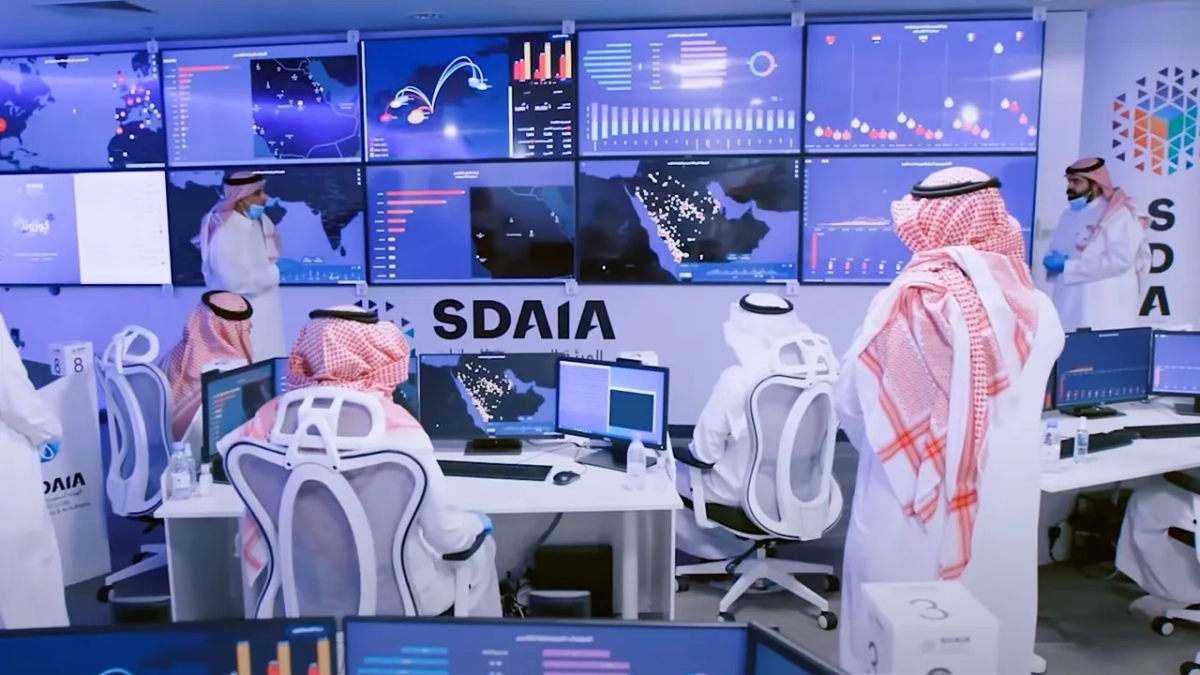
RIYADH — The Saudi Data and AI Authority (SDAIA) released a comprehensive study on the state of artificial intelligence in the Kingdom, reviewing national progress across seven main pillars and 15 sub-pillars spanning regulatory frameworks, investments, digital infrastructure, data governance, human capital, research and innovation, and institutional adoption. The report details Saudi Arabia’s advanced positions across international benchmarks, including ranking third globally in AI talent growth rate under the 2026 Stanford HAI Index, third globally and first regionally in the development of leading AI models under the 2025 index, and fifth globally in AI sector growth according to the 2025 Observer Index. The Kingdom also secured 26 awards at the 2025 World Artificial Intelligence Competition for Youth and officially joined the Global Partnership on Artificial Intelligence in 2026. In digital infrastructure, domestic data center capacity expanded by 115.8 percent between 2023 and 2025. National compute power is anchored by the Shaheen III supercomputer—leading the GCC on the 2026 TOP500 list—alongside the Hexagon Data Center, the world' largest government-owned Tier IV facility with a 480-megawatt capacity. Saudi Arabia also hosts nine hyperscale cloud regions by mid-2026, including four currently under development by global providers. Regarding national data ecosystems, some 515 government systems have been integrated into the National Data Lake under the National Data Bank, aggregating 5.87 petabytes from over 90 government entities in 2026. Open datasets exceeded 21,800 across 346 public and private contributors during the same year. Furthermore, over 500 billion Arabic data units powered the development of the "ALLaM 34B" large language model in 2025, while the King Salman Global Academy for Arabic Language's "Falak" platform reached 2.2 billion words. On human capital, the study found that 84 percent of the Saudi public is familiar with AI concepts, with more than 1.2 million beneficiaries participating in the first phase of the "SAMAI" initiative by July 2026. From 2021 to 2025, over 69,300 technical graduates entered the market, contributing to a 15 percent compound annual growth rate (CAGR) in domestic AI talent density. In research and innovation, AI-focused scientific publications registered a 37.4 percent CAGR between 2021 and 2025, while related patent filings grew by 34.52 percent from 2020 to 2024. Local development produced eight large language models and 58 specialized AI applications, according to the Ministry of Communications and Information Technology's 2026 report. Government adoption reached high maturity, with 90 percent of public entities maintaining an AI strategy, 97 percent deploying or building AI tools, 77 percent enforcing formal AI governance, and 63 percent complying with SDAIA's national principles. Nearly half (48 percent) of adopting entities reported internal operational efficiency gains exceeding 10 percent. The study also affirmed the Kingdom's global leadership across key sub-indices, ranking first worldwide in women's empowerment in AI, first in AI security, privacy, and encryption, first in digital readiness, third in student adoption of generative AI, sixth in government strategy, and seventh in financial sector funding.