Apple has a strong reputation for offering good software support. iOS developers have every incentive to update their apps to match new and evolving iPhone features, and the user base greatly benefits.
Naturally, given Apple's reputation, many people believed the iPhone Duo would show Samsung what good app support really looks like on a foldable phone. But as it turns out, Samsung and Android are leading the way this time around.
This could change, especially given how quickly iOS app developers can release updates. But as of this writing, Android apps adapt to the Galaxy Z Fold 8's screens much better than iOS apps do on the iPhone Duo.
iPhone Duo app support is messier than anyone expected
One of the biggest challenges foldable phones raise is that the UI must adapt to two different screen shapes and sizes on the same device.
iOS and Android OS handle app scaling very differently, and as of this writing, Android has the advantage, particularly in the foldable niche. There are two main reasons why:
Reason #1: Android's responsive UI scaling suits foldables
Without getting too technical, iOS resizes apps and UIs according to preset resolutions and aspect ratios. In essence, it has a list of supported resolutions and aspect ratios, and iOS apps can be developed to support some or all of them.
In contrast, Android OS offers a responsive and adaptive design. UIs and layouts are not locked into fixed grids and can be stretched and reflowed more freely — as long as the app was developed with this flexibility in mind. Not all were.
This core difference, combined with the fact that the iPhone Duo has an unusual cover screen even compared to the Galaxy Z Fold 8, means that more apps look better optimized on the Fold 8 than they do on the iPhone Duo. At least right now.
Reason #2: iPhone Duo's weird proprietary UI design
Apple's foldable is even quirkier because, unlike the Fold 8, it doesn't have a true 16:10 cover screen. It's more like 14.5:10, which looks even shorter and wider than the Fold 8. And without Android's clever responsive UI design, app developers have a harder time stretching their UIs to match the Duo.
Even weirder is that Apple decided to use the iPhone Duo's extra screen width for a new iOS control surface. In essence, the right side of the iPhone Duo's screens accommodates a sort of taskbar that app developers have to account for.
If they don't, that's when things start to look ugly. iOS apps that haven't been optimized for the iPhone Duo's screens completely ignore that taskbar area and draw a blank area. They essentially don't run full-screen and ignore the rightmost side of the displays.
And yes, this issue exists across the cover screen, where it's arguably more egregious, and the foldable panel. The latter doesn't have a true iPad aspect ratio either, and therefore can't accommodate every iPad app in full-screen natively.
Apple apps support the iPhone Duo's unusual design, but many third-party apps don't. This will likely change over the coming weeks and months, as more people slowly get their hands on the iPhone Duo. And in the end, perhaps Apple will offer the more compelling app experience. But not right now.
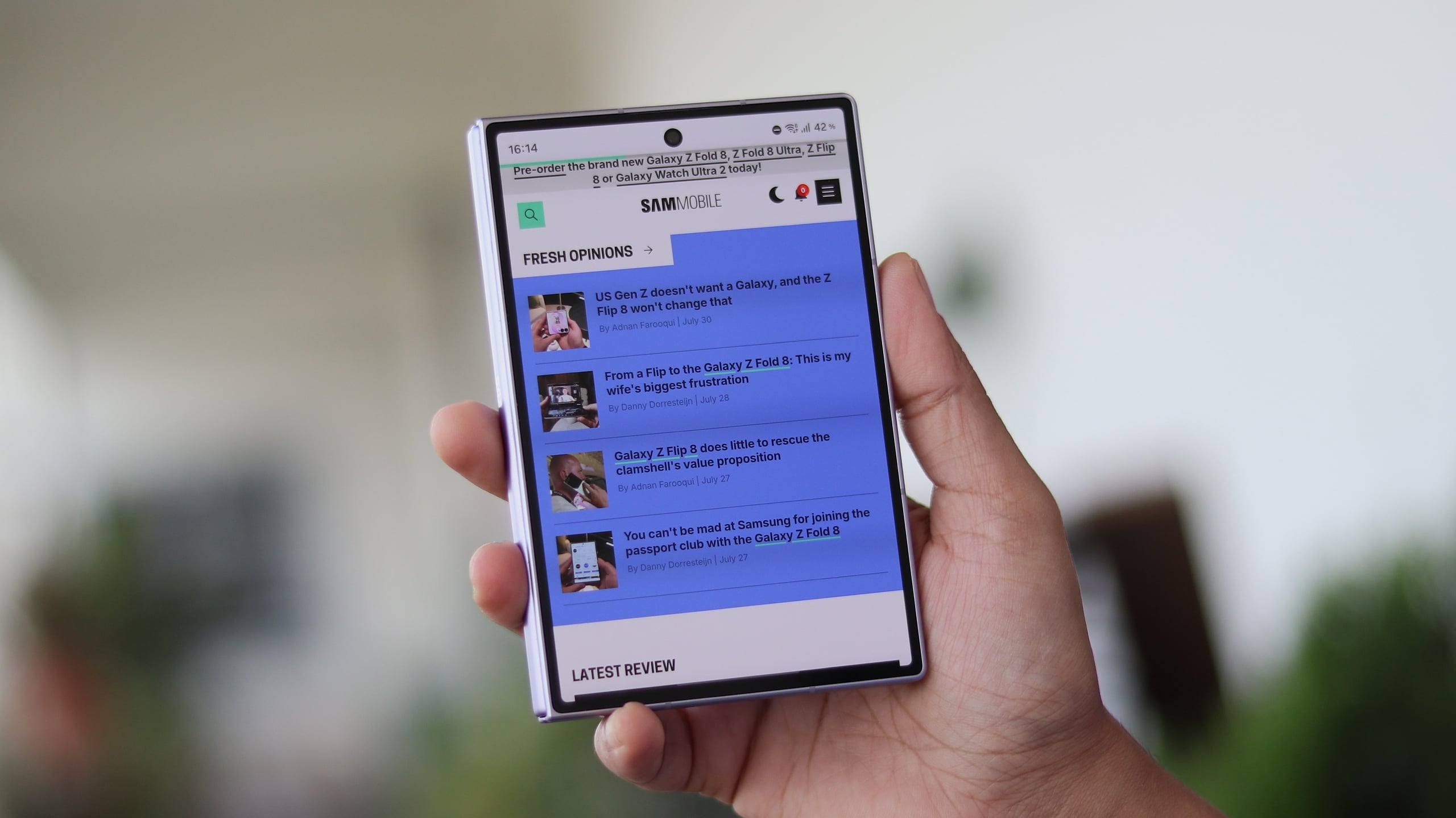
As of this writing, Samsung's Galaxy Z Fold 8 offers better foldable app support on both the cover and foldable screens.








 Loading ...


