
Related News
Two Snapdragon 8 Elite Gen 6 chips unveiled, one could be used in Galaxy S27



Posted by - support -
on - 1 hour ago -
Filed in - Technology -
-
4 Views - 0 Comments - 0 Likes - 0 Reviews
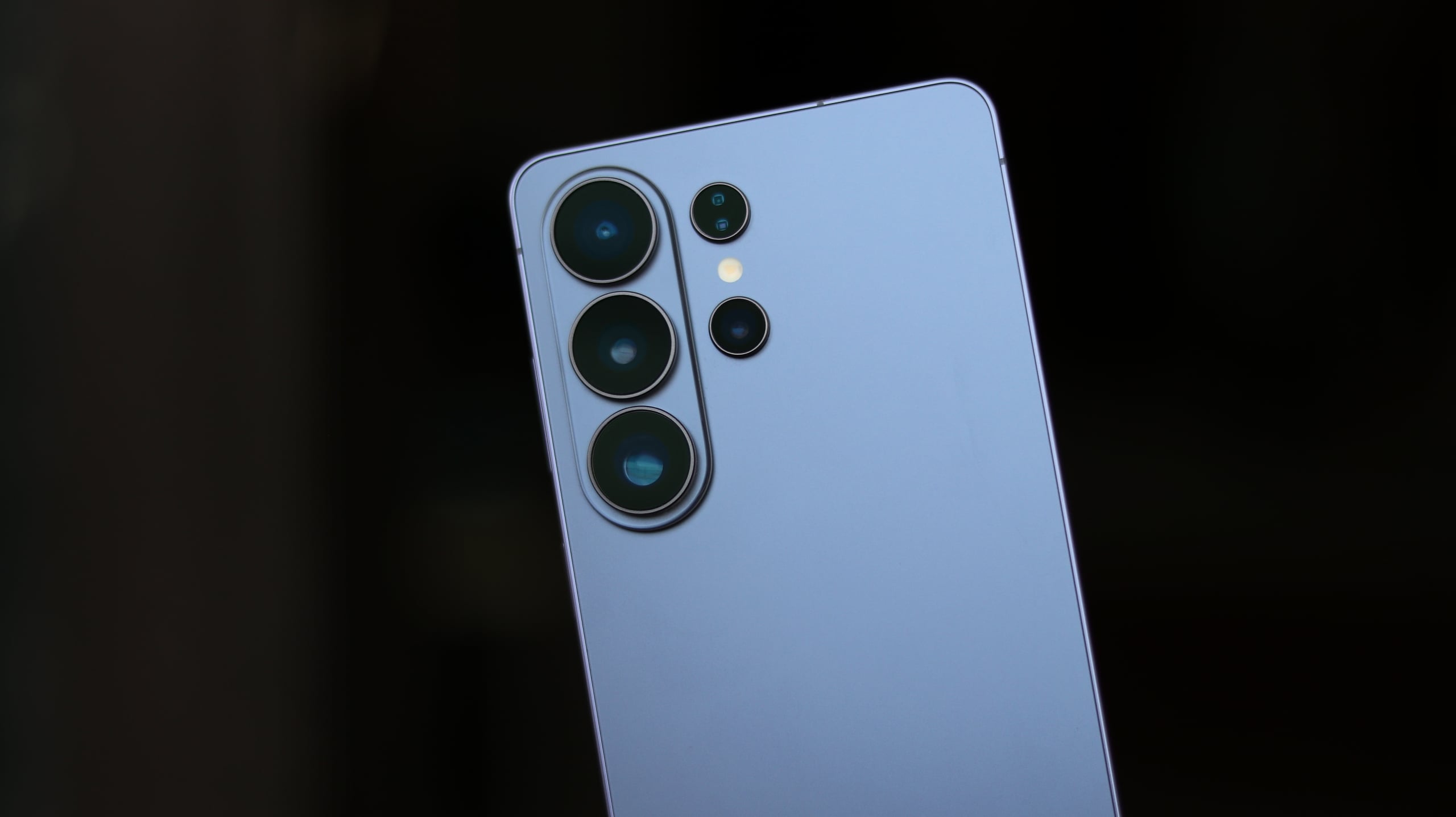
Qualcomm usually announces just one flagship processor during its annual Snapdragon Summit event. However, during the Snapdragon Summit 2026 event yesterday, the company unveiled two new high-end chips: the Snapdragon 8 Elite Gen 6 and the Snapdragon 8 Elite Extreme Gen 6. One of these chips is highly likely to be used in the upcoming Galaxy S27 series.
Both of these are the company's first 2nm chips, fabricated on TSMC's N2P process node. They will compete with Apple's A20 Pro chip, MediaTek's Dimensity 9600 series chips, and Samsung's upcoming Exynos 2700 processor.

The Snapdragon 8 Elite Gen 6 (SM8950) features an octa-core CPU with custom Oryon cores. It includes two Prime cores clocked at up to 5GHz, six Performance cores clocked at up to 4GHz, and 16MB of Oryon FlexCache memory.
Qualcomm states that this chip's CPU is 10% faster and offers 37% improved power efficiency compared to last year's Snapdragon 8 Elite Gen 5.
It utilizes the Adreno 845 GPU, which features real-time hardware-accelerated ray tracing. The GPU delivers 35% better performance and 40% better power efficiency over the previous generation. It supports HDR and high-frame-rate gaming, alongside advanced rendering tools like Lumen Global Illumination, Nanite Virtualized Geometry, and Game Quick Touch 3.0.
The chip can drive screens at up to QHD+ resolution with a 240Hz refresh rate, 4K+ resolution at up to a 120Hz refresh rate, or 8K resolution at up to a 30Hz refresh rate. Display support includes Dolby Vision, HDR10, HDR10+, HDR Vivid, 10-bit color depth, and the Rec. 2020 color gamut.
The onboard Hexagon NPU has been reengineered with the new Element Accelerator, providing 14% better performance and a 20% improvement in performance-per-watt. It features an up to 32,000-token context window and supports Agentic AI workflows.
The chip supports up to 24GB of LPDDR5x or LPDDR6 RAM and UFS 5.0 storage.
The Qualcomm Sensing Hub incorporates dual micro NPUs and dual always-sensing image signal processors (ISPs). This enables always-on audio and video intelligence, as well as constant voice recognition for AI assistants. It is also responsible for activity and motion tracking and sensor-assisted navigation.
For imaging, the new Spectra ISP features a triple 20-bit AI-powered setup. It supports up to 320MP camera sensors, 108MP resolution capture with zero shutter lag, or up to three 64MP camera sensors operating simultaneously.
Video recording capabilities include up to 4K at 120fps or 8K at 30fps with HDR, as well as 4K 120fps slow-motion capture.
Cellular connectivity is powered by the built-in Qualcomm X105 5G modem, which supports both mmWave and sub-6GHz 5G networks in SA and NSA modes. It can reach peak download speeds of up to 14.8Gbps and peak upload speeds of up to 4.2Gbps, utilizing six antennas and a 4×4 MIMO setup for sub-6GHz networks.
Qualcomm claims the X105 is the world's first 3GPP Release 19-ready 5G modem. It supports NB-NTN and NR-NTN direct satellite communication for audio calls, data, messaging, and video calls during emergencies or when conventional mobile networks are out of range.
Additional connectivity features include Wi-Fi 8 (up to 11.65Gbps), Bluetooth 6.0, Thread 1.4, UWB, NFC, and USB 3.2 Gen 1. Supported global positioning constellations include Beidou, Galileo, GLONASS, GPS, NavIC, and QZSS with triple-band connectivity.
The Snapdragon Sound technology provides Bluetooth wireless connectivity with LE Audio, lossless audio playback at up to 24-bit/96kHz resolution, and spatial audio with dynamic head tracking.
The Snapdragon 8 Elite Extreme Gen 6 offers even faster performance and better camera capabilities.
It shares the same basic octa-core CPU architecture, with two Prime cores clocked at up to 5GHz, six Performance cores that reach up to 4GHz, and 16MB of Oryon FlexCache memory. However, Qualcomm claims this specific iteration yields 13% faster CPU performance and 37% better CPU power efficiency compared to the previous generation.
The Adreno 850 GPU includes 18MB of dedicated high-bandwidth memory (HBM) and dedicated AI Matrix Cores designed to handle intensive machine learning tasks. Overall, Qualcomm states the Extreme Gen 6 GPU delivers a 44% performance increase and 40% improved power efficiency.
The GPU also introduces Adreno Neural Fusion, using AI for advanced frame resolution upsampling and frame generation. Display capabilities remain robust, driving up to QHD+ resolution at 240Hz, 4K+ at 120Hz, or 8K at 30Hz, with full support for Dolby Vision, HDR10, HDR10+, HDR Vivid, 10-bit color depth, and the Rec. 2020 color gamut.
A major addition for gaming is MegaLights, a real-time light rendering technology that allows developers to utilize an effectively unlimited number of dynamic light sources. Combined with Nanite technology for automatic geometric detail scaling, the chip is heavily optimized for high-end, high-frame-rate mobile gaming.
The upgraded Hexagon NPU features the Element Accelerator and 50% larger shared memory compared to the standard Elite Gen 6. It delivers 35% higher AI performance and 33% better performance-per-watt. It supports an up to 32,000-token context window and can run Mixture of Experts (MoE) AI models with over 30 billion parameters locally.
Memory and storage support remain at 24GB of LPDDR5x or LPDDR6 RAM and UFS 5.0.
The Spectra ISP retains the triple 20-bit AI-powered design, supporting 320MP sensors (108MP with zero shutter lag) and triple 64MP concurrent capture. However, video capabilities are significantly enhanced. It can record 8K video at 60fps and 4K super slow-motion video at up to 240fps.
The ISP notably supports Samsung's Advanced Professional Video (APV) format for high-quality capture and professional editing workflows. It also features hardware-level Global VVC (H.266) decoding, improving playback power efficiency by up to 55%.
Connectivity is similar to the standard model, featuring the Qualcomm X105 5G modem with peak download speeds of 14.8Gbps and upload speeds of 4.2Gbps. It supports mmWave and sub-6GHz networks in SA and NSA modes, alongside NB-NTN and NR-NTN technologies for emergency direct satellite communication across audio, data, and video.
It includes comprehensive GNSS support with up to triple-frequency connectivity, Wi-Fi 8, Bluetooth 6.0, UWB, Thread 1.4, NFC, and USB 3.2 Gen 1.
One of these chips will be used in high-end phones from almost all Android smartphone brands, including Samsung.
The Galaxy S27 Pro and the Galaxy S27 Ultra could use the Snapdragon 8 Elite Extreme Gen 6 globally, while the Galaxy S27 and the Galaxy S27+ could use the Snapdragon chip in China and North America.
At our community we believe in the power of connections. Our platform is more than just a social networking site; it's a vibrant community where individuals from diverse backgrounds come together to share, connect, and thrive.
We are dedicated to fostering creativity, building strong communities, and raising awareness on a global scale.


 Loading ...

