
Related News






Samsung Galaxy Buds On hands-on
Posted by - support -
on - 2 hours ago -
Filed in - Technology -
-
5 Views - 0 Comments - 0 Likes - 0 Reviews
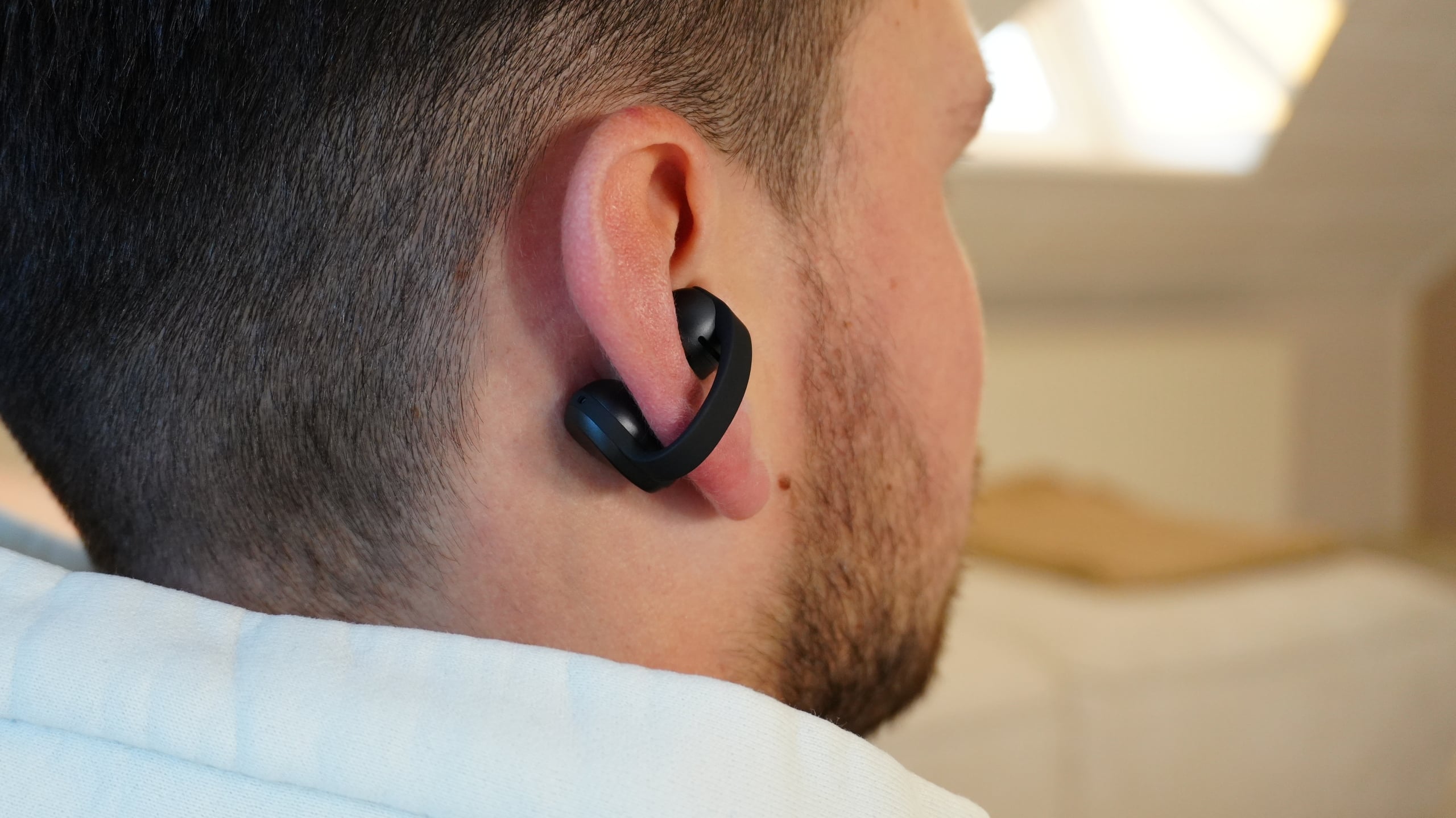
These might be the strangest Galaxy Buds Samsung has ever made. Unlike pretty much every other pair of Galaxy Buds, these don't go inside your ears. Instead, they clip onto the outside, almost like a piece of jewelry.
The Galaxy Buds On are Samsung's first clip-on earbuds, and they cost $229. I've been curious about them ever since Samsung announced them, mainly because they're so different from what we're used to.
I've finally got my hands on a pair, and while it's too early for a full review, here are my first impressions.
Design

The charging case should look familiar to anyone who's used Samsung's recent Galaxy Buds, but the earbuds themselves are completely different.
There's no silicone ear tip, no stem, and nothing you have to push into your ear canal. Instead, a curved band connects the speaker on one side to the battery section on the other, allowing the earbuds to wrap around your ears.


Samsung only offers them in black, at least for now, and each earbud weighs 6.65 grams.
One interesting detail is that the earbuds aren't assigned to a specific ear. You can wear either one on the left or right, and they'll automatically recognize which side they're on. That's pretty convenient.


The case supports both USB-C and wireless charging, so there's nothing particularly surprising there.
Comfort and fit

The big question for me is how comfortable these actually are. After all, that's one of the main reasons you might want something like this instead of regular in-ear earbuds.
With the Galaxy Buds4 Pro, for example, you have silicone tips sitting inside your ears. That's great for noise cancellation, but not everyone finds it particularly comfortable, especially after a couple of hours.
The Buds On take a different approach. You slide them around the outside of your ear, with the speaker sitting near your ear canal rather than inside it.


Samsung says they're also designed for workouts, and with an IP54 rating, they should be fine with a bit of sweat or rain.
Of course, wearing them for a few minutes doesn't tell me how they'll feel after five or six hours. That's something I'll have to figure out over the next few days. But the idea of listening to music without having something constantly sitting inside my ears is definitely interesting.
Sound quality

With regular earbuds, you usually get a good seal inside your ears, which helps with bass and blocks out some background noise. With the Galaxy Buds On, you're giving that up.
There's no active noise cancellation here, and that's intentional. The whole point is that you can listen to music while still hearing what's happening around you.
If you're walking outside, working in an office, or just don't want to be completely cut off from the world, that could be useful. But obviously, you still want your music to sound good.

Samsung is using 11.3mm TwinBoost speakers, which are supposed to help with bass despite the open design. There's also something Samsung calls Audio Leakage Reduction, which aims to keep your music from being heard by everyone sitting next to you.
That's particularly important with open-ear earbuds. Nobody wants to hear someone else's playlist on the train.
An Auto Volume feature can also adjust the volume depending on the noise around you. There's quite a bit going on here, but I'll need more time before I can judge how well it all works in everyday situations.
Features and Galaxy integration

Since these are Samsung earbuds, you also get a bunch of additional features when using them with a Galaxy phone.
Pairing is straightforward. Open the case, connect the earbuds to your phone, and you can access their settings directly through the Quick Panel without installing the Galaxy Wearable app. You can adjust the equalizer, change the touch controls, and customize a few other things.

There are also features like Head Gestures, which lets you answer a phone call by nodding your head or reject it by shaking your head. It sounds a little silly, but can be useful when your hands are full.
Then there's Quick Voice Memo. You can press and hold an earbud, start talking, and have your phone turn what you're saying into a note.


There's also support for Gemini Live, so you can talk to Google's AI assistant without taking your phone out of your pocket. It's not something I'd use every five minutes, but it's nice to have.
Microphones and battery life
Microphone quality is another thing I'm curious about. Samsung has fitted three microphones into each earbud, along with a sensor that helps detect when you're speaking.
The idea is to make your voice easier to hear, even with some background noise, though I'll need more time to assess microphone performance.
As for battery life, Samsung claims up to nine and a half hours of music playback from the earbuds themselves. With the charging case, that goes up to 38 hours in total. Those are pretty good numbers on paper, but real-world endurance remains to be seen.
First impressions

The Galaxy Buds On are interesting, mainly because they're so different from Samsung's regular earbuds. But I don't think they're necessarily meant to replace something like the Galaxy Buds4 Pro.
If you want to block out background noise on a plane or public transport, I'd still look at in-ear earbuds with active noise cancellation.
The Buds On are more about listening to music throughout the day without completely shutting out your surroundings. Depending on how comfortable you find regular earbuds, that could be a pretty big advantage.
The price is where things get a little tricky. At $229 in the US, they're only $20 cheaper than the Galaxy Buds4 Pro at their regular launch price. You're paying quite a bit for this design.
For now, these are just my first impressions. I'll need to spend more time with them before deciding whether they're worth the money.


 Loading ...
 update is here for Galaxy Tab S10 Lite)


